
The modern wellness consumer pays close attention to what they eat, drink and bring into their homes.
And then they go to the gym.
It’s one of the greatest blind spots in contemporary wellness culture. The same person who actively controls what they put in their body will spend 90 minutes a day, five days a week, breathing deeply, deliberately, in a gym engineered almost entirely from petroleum derivatives. The upholstery is vinyl. The dumbbells are coated in synthetic rubber. The cardio machines are housed in plastic shells. Every surface, every grip, every mat is releasing volatile organic compounds, or VOC’s into the air being drawn more deeply into the lungs than at any other time of day.
This is the invisible compromise. It is the unexamined input.
WHAT THE AIR ACTUALLY CONTAINS
VOCs are carbon-based chemicals that evaporate at room temperature. They’re often behind that ‘new product’ smell, whether from a yoga mat, piece of equipment or freshly finished interior. The smell fades. The compounds, in many cases, do not.
Synthetic rubber, the material of choice for most dumbbells and weight plates manufactured over the last four decades, can release a mixture of sulphur compounds, carbon residues and accelerator chemicals into the surrounding environment.
The compounds themselves are not unfamiliar. Formaldehyde. Benzene. Toluene. Xylene. Phthalates. They are among the same substances consumers have become increasingly conscious of avoiding in other areas of daily life. Several are classified by the Wold Health Organisation as known or probable carcinogens.
Research into air quality in fitness facilities remains limited, but existing studies suggest gyms warrant greater attention. As Costarramone et al. (Building & Environment, 2026) note, the combination of intensive physical activity and widespread use of plastic-based equipment can increase exposure to organic contaminants.
Yet gym equipment has largely escaped the same scrutiny seen elsewhere in the wellness industry.
WHY EXERCISE CHANGES THE EQUATION
Most conversations about air quality focus on everyday exposure. Fitness environments are different.
When exercising, breathing becomes deeper and more rapid. Air is drawn further into the respiratory system and often through the mouth rather than the nose, reducing some of the body’s natural filtration.
According to Manazyle et al. (Science of the Total Environment, 2026), increased ventilation during exercise can result in more airborne pollutants being inhaled and carried deeper into the respiratory tract.
In other words, if material emissions matter anywhere, they matter even more in a room designed for intensive physical activity.
WHY THE CONVERSATION HAS NOT HAPPENED
The fitness industry adopted synthetic materials for the same reasons many industries did: they are affordable, durable and easy to manufacture at scale.
For decades, consumers accepted this trade-off because there was little visible alternative. That is beginning to change.
Hotel groups increasingly specify low-VOC paints, natural fibres and responsibly sources materials. Residential architecture has steadily moved towards healthier material palettes, while private aviation interiors increasingly favour natural materials over synthetic finishes.
The gym has largely lagged behind because it was traditionally viewed as a functional, industrial space rather than an extension of the home.
That assumption no longer holds.
The wellness room in a Mayfair townhouse and the training space aboard a superyacht are often designed to the same standards as every other room. Every detail is considered, except frequently the equipment itself.
It has become one of the last overlooked surfaces in an otherwise carefully considered environment. Yet as wellness spaces become more sophisticated, expectations around the materials that shape them are beginning to change.
THE STANDARD WORTH SETTING
There is another approach.
Research increasingly points to the importance of material selection in indoor environments. Costarramone et al. found that VOC concentrations within sports facilities are influenced not only by ventilation but also by the type of sports equipment present, highlighting the importance of low-emission materials in indoor air quality management.
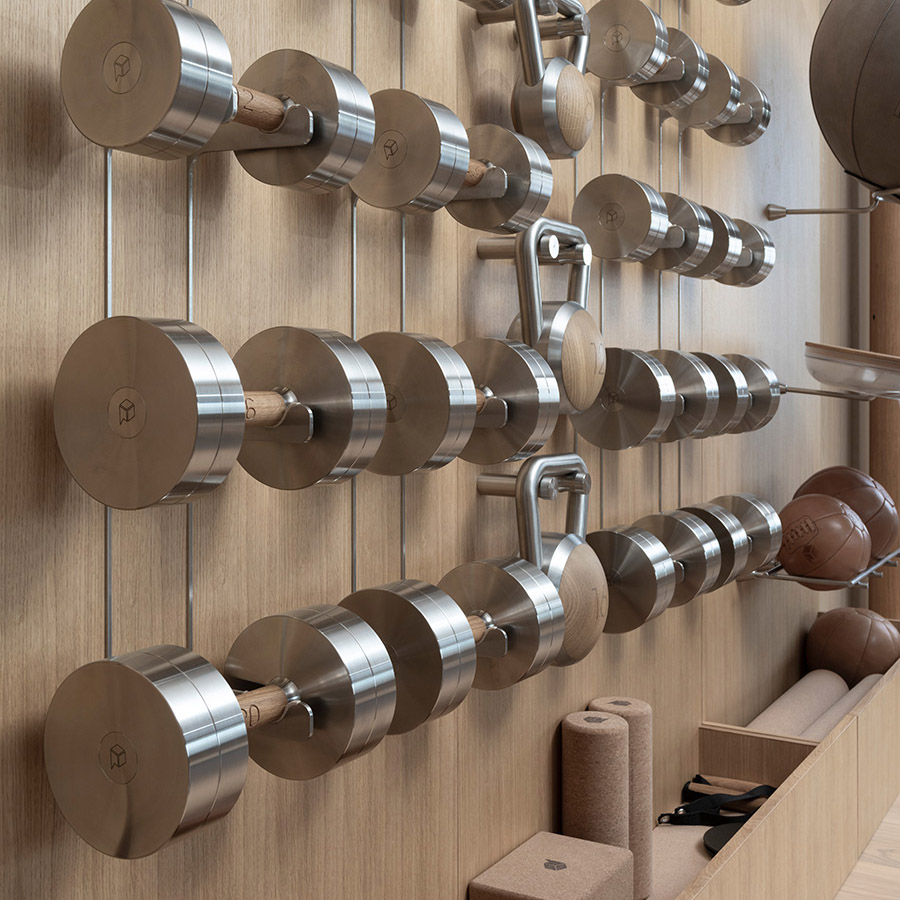
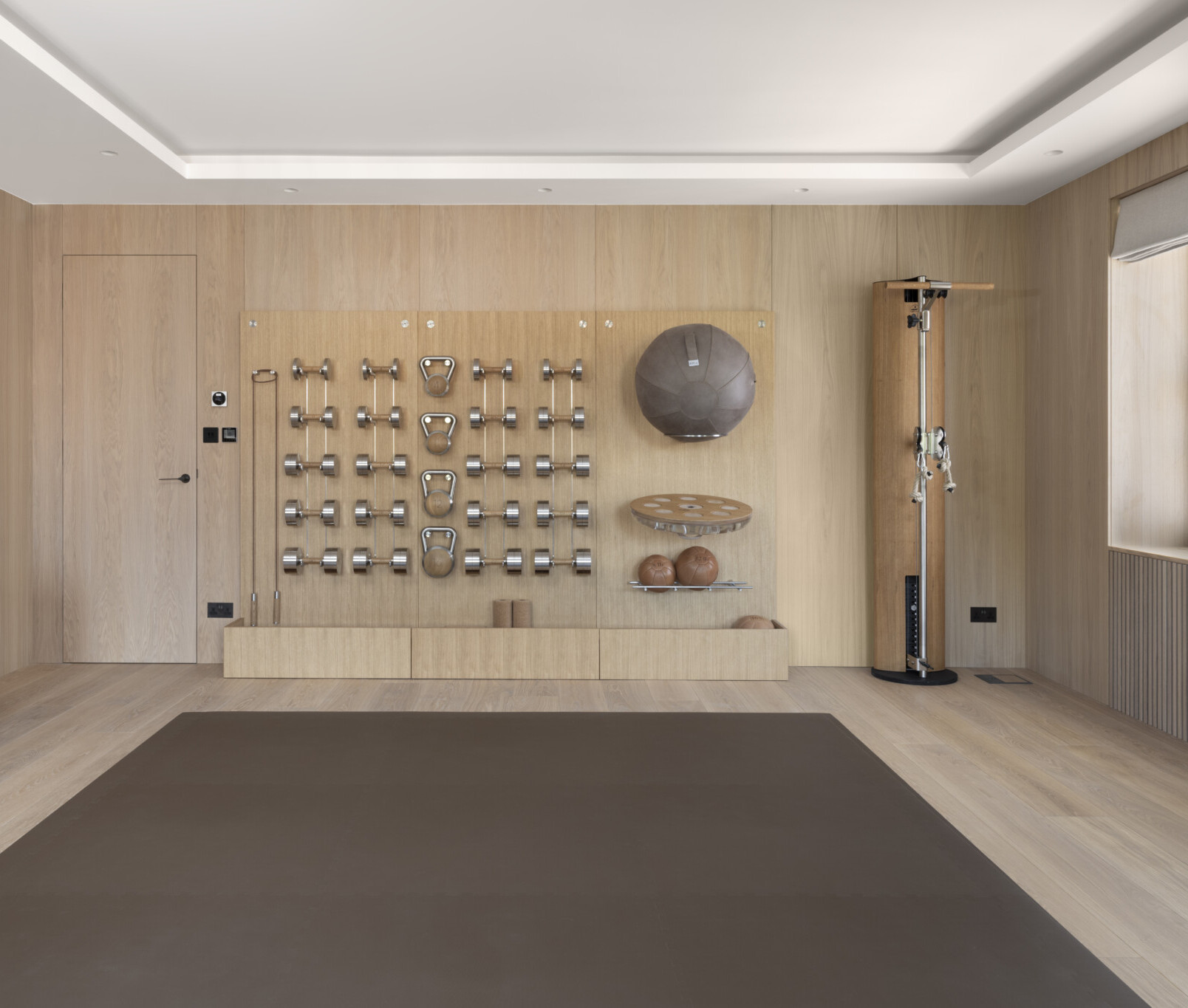
It starts by treating fitness equipment less like industrial machinery and more like furniture: objects built from natural, durable materials chosen for both performance and longevity. Hardwoods rather than moulded plastics. Full-grain leather rather than vinyl. Solid metal components rather than synthetic housings.
The process is slower and more costly, but it produces equipment that is quieter, longer-lasting and lower in emissions.
Paragon Studio was founded to build exactly that. Our bespoke equipment is designed and crafted in the United Kingdom using materials selected to the same standards as the interiors they occupy. Benches are upholstered in leather. Frames combine hardwood and steel. Handle details are finished in leather and brass. Through complete control of our manufacturing process, even surface finishes can be specified using natural beeswax coatings in place of conventional lacquers.
The result is equipment designed to complement, rather than compromise, the environment around it.
As consumers become more conscious of the materials that shape their daily lives, it seems only logical that they begin asking the same questions about the equipment they spend hours using each week.
The person who has spent a decade removing unnecessary synthetic compounds from every other room in the home shouldn’t have to accept them in a space dedicated to health and performance.
Paragon Studio was founded to offer an alternative.
BY EDWARD THOMAS – FOUNDER, PARAGON STUDIO